


Cactus Leather vs. PU Leather: A Side-by-Side Comparison
- OPUNE®
- Mar 19
- 8 min read
Updated: Mar 20
Written by Harsh Jani, Founder of Opune - 2026
PU leather has dominated the synthetic leather market for thirty years. Cactus leather has existed commercially for less than five. Here is what the data actually shows when you put them side by side.
For procurement managers, product designers, and sustainability leads at fashion and lifestyle brands, one question comes up consistently: is cactus leather actually better than PU leather, and does the difference justify the switch? This comparison gives you a factual answer no marketing spin, no oversimplification.
The answer is not black and white. It depends on what your brand is building, who it is building for, and what regulatory environment it is selling into. What this guide does is give you the complete picture material science, commercial reality, compliance landscape, and sourcing considerations so your team can make an informed decision rather than a marketing-driven one.
What Is PU Leather?
PU leather (polyurethane leather) is a synthetic material made by coating a fabric base typically polyester or cotton with a polyurethane polymer layer. It has been the dominant vegan and synthetic leather alternative since the 1990s. PU leather is widely used in fashion accessories, footwear, automotive interiors, furniture upholstery, and consumer electronics accessories.
PU leather is not inherently bad. It is lower cost, consistent in quality, widely available, and has established performance benchmarks that suppliers and brands have refined over decades. The manufacturing process is mature, the supplier base is global, and the material behaviour is predictable.
The problem is its environmental profile. PU leather is derived from petroleum a non-renewable resource. It does not biodegrade; it is essentially a plastic sheet that will persist in landfill indefinitely after disposal. Its manufacturing process involves solvents including DMF (dimethylformamide) a chemical classified as a reproductive toxin under EU REACH regulation and restricted in several other jurisdictions including California. The carbon footprint of PU leather production is entirely petrochemical in origin, with no bio-based offset at any stage of the manufacturing process.
For brands that have been using PU leather for years, the regulatory trajectory is the most important consideration. The material that worked perfectly well commercially in 2015 is facing a progressively more difficult compliance environment in 2026.
What Is Cactus Leather?
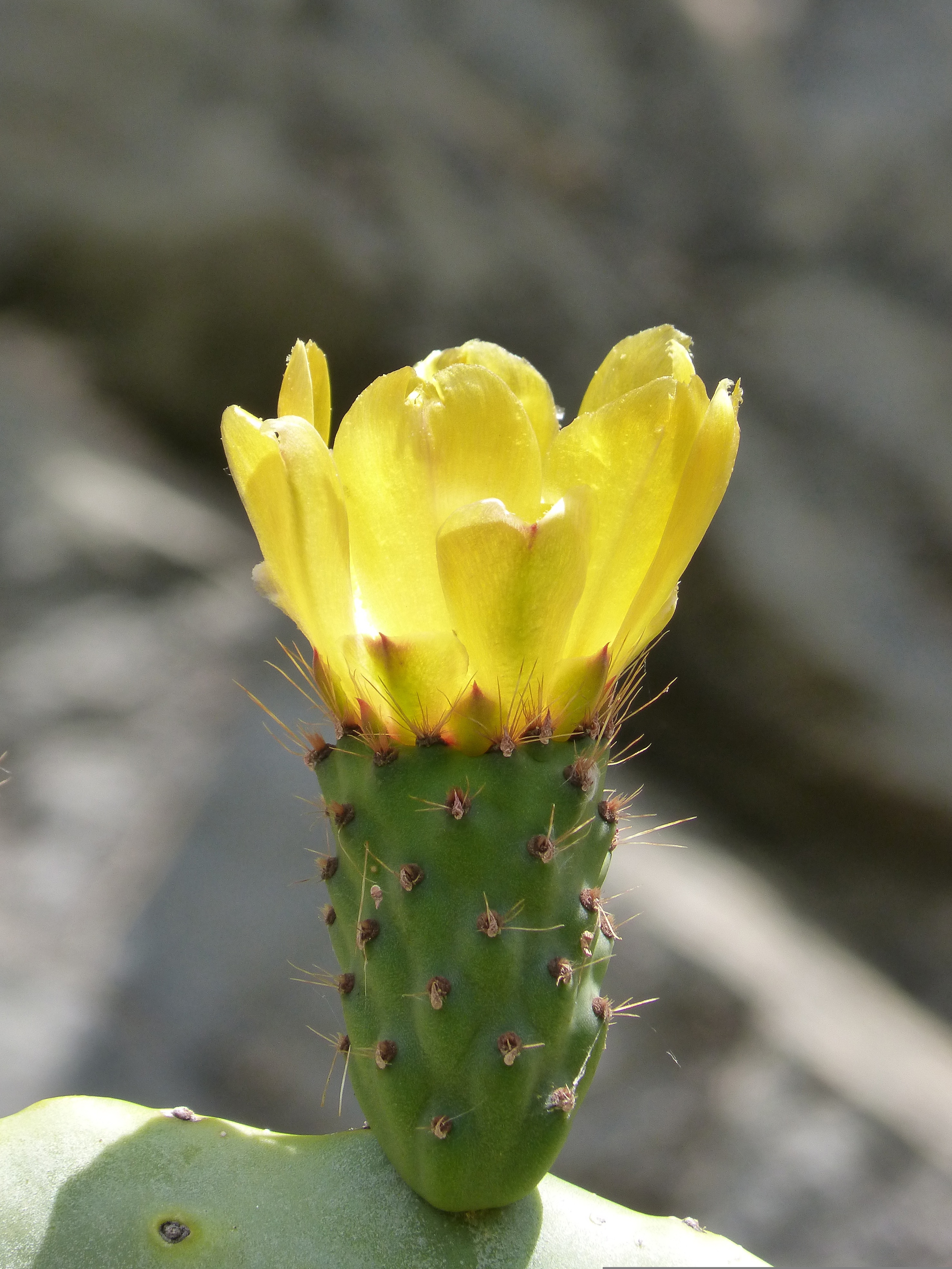
Cactus leather is a bio-based material manufactured from the fibres of the Opuntia cactus commonly known as nopal cactus. The nopal plant is native to semi-arid environments and grows without irrigation, without pesticides, and without fertilisers. Mature cactus pads are harvested without uprooting or destroying the plant the plant continues growing and producing harvestable material for up to eight years per cycle.
The harvested pads are dried naturally using solar energy, ground into fibre, and combined with a partially bio-based resin binder to produce a leather-like sheet material. This sheet is applied to a fabric backing typically organic cotton or recycled polyester and finished to the required surface texture, colour, and thickness specification.
The result is a material that is tactile, flexible, breathable, and visually indistinguishable from conventional leather in many applications. It is not a perfect material no bio-based alternative is at this stage of commercial development. But its material science is fundamentally different from PU leather, and that difference has real commercial and regulatory consequences.
Opune produces cactus leather in India with scientifically documented formulation and performance specifications verified through rigorous institutional research not startup-level sampling. Our material is production-ready, specification-documented, and available for B2B supply to fashion houses, footwear brands, automotive interior suppliers, and accessory manufacturers globally.
Cactus Leather vs PU Leather: The Direct Comparison
Durability
This is the question that matters most to product teams, and it is also the area where cactus leather has historically faced the most skepticism.
PU leather's durability problem is well documented in the market. The material typically shows visible degradation surface cracking, peeling, and delamination of the polyurethane coating from the backing fabric within 2 to 4 years of regular use in accessories. Anyone who has owned a PU leather handbag or wallet for more than three years has experienced this firsthand. The failure is structural: the polyurethane coating eventually separates from its base, and there is no repair pathway. The product goes to landfill.
Opune's cactus leather has been independently tested to simulate extended product lifespan conditions equivalent to regular use over multiple years in handbags, belts, wallets, and footwear applications. In tensile strength and abrasion resistance tests, Opune cactus leather meets or exceeds the performance benchmarks of mid-grade PU leather. The material does not delaminate in the way PU does because the cactus fibre is integrated throughout the material structure rather than coated on top of a synthetic base.
The practical implication: cactus leather produces a product that lasts longer, generates fewer customer complaints about material failure, and carries a lower reputational risk for the brand behind it.
Biodegradability
PU leather does not biodegrade. It is a plastic material and will persist in landfill for hundreds of years after disposal. As extended producer responsibility regulations expand globally particularly in the EU brands will increasingly be held accountable for the end-of-life profile of their products. A non-biodegradable synthetic material is a liability in this regulatory environment.
Cactus leather is partially biodegradable. The bio-based cactus fibre components break down naturally in composting and landfill conditions. The degree of biodegradability depends on the resin composition and backing fabric used. Opune offers organic cotton backing as the most biodegradable configuration the resulting material has the highest bio-based content and the most favourable end-of-life profile of any cactus leather currently available for B2B supply.
Full biodegradability is not achievable with any current cactus leather formulation the resin component requires further development to reach that standard. Any supplier claiming 100% biodegradability should be asked to provide testing documentation, as this claim is not currently supportable with verified data.
Breathability and Comfort

This is a performance dimension that rarely appears
in comparison guides but matters enormously in footwear, automotive interiors, and any application where the material is in prolonged contact with skin.
PU leather does not breathe. The polyurethane coating creates an impermeable surface that traps heat and moisture. In footwear, this produces the well-known discomfort of synthetic shoes in warm conditions. In automotive interiors, it contributes to surface temperature buildup and the distinctive smell of heated synthetic materials.
Cactus leather is breathable. The porous structure of the cactus fibre allows air and moisture vapour to move through the material. In footwear and accessories applications, this translates directly to improved wearing comfort. In automotive interiors, it reduces surface temperature buildup and eliminates the off-gassing smell associated with PU leather in warm conditions.
For brands in the footwear and automotive sectors, breathability is not a marginal benefit it is a primary functional performance criterion.
Water Resistance
Both materials offer surface-level water resistance under standard finishing conditions. Standard PU leather is water-resistant by default due to its polyurethane coating. Cactus leather with standard finishing is similarly water-resistant and handles light moisture exposure well water beads on the surface rather than absorbing into the material.
Neither material should be submerged or left in contact with standing water for extended periods without a specialised waterproof coating applied as an additional finishing step. For applications requiring full waterproofing marine accessories, outdoor gear, technical footwear both materials require additional treatment, and the specifications should be confirmed with the supplier before committing to a material choice.
Chemical Profile and Regulatory Compliance
This is where the difference between the two materials is most consequential for brands selling into regulated markets.
PU leather manufacturing commonly involves DMF (dimethylformamide) as a processing solvent. DMF is classified as a reproductive toxin under EU REACH regulation. It is restricted under California's Proposition 65. It requires specific documentation for import into Japan. Brands sourcing PU leather for these markets need to verify DMF levels with their supplier and maintain documentation a compliance burden that will increase as regulations tighten.
Opune's cactus leather is manufactured without DMF, phthalates, or heavy metals. The chemical profile is clean by default, without requiring additional testing or reformulation to meet EU, UK, US, or Japanese market requirements. For brands that have experienced the friction of chemical compliance documentation in regulated markets, this is a significant operational advantage.
The broader regulatory picture reinforces this. The EU's ESPR (Ecodesign for Sustainable Products Regulation, 2024) and the EU Strategy for Sustainable and Circular Textiles are building a legislative framework that will progressively restrict petroleum-derived synthetic materials in the European market. The timeline for full implementation runs through 2026 to 2030 — meaning brands that begin the material transition now are positioning ahead of mandatory compliance rather than scrambling to meet it under deadline pressure.
Carbon Footprint
Cactus leather carries up to 3x lower carbon footprint than conventional PU leather across its full production lifecycle, based on Opune's verified production lifecycle data.
The reasons are structural. Nopal cactus absorbs CO2 during its growth cycle, making the raw material stage carbon-negative before any processing begins. The drying process uses solar energy. No irrigation water is consumed. No synthetic fertilisers or pesticides are used. The manufacturing process eliminates the petrochemical synthesis stage that dominates PU leather's carbon profile.
PU leather's carbon footprint is entirely petrochemical in origin. Every stage of its production from the petroleum feedstock to the polymerisation process to the solvent systems used in coating generates carbon emissions with no bio-based offset.
For brands with published sustainability commitments or net-zero targets, the material switch from PU to cactus leather represents one of the highest-impact single changes available in the accessories and footwear supply chain.
Cost
PU leather is currently less expensive per square metre than cactus leather. This is a factual reality that no cactus leather manufacturer should obscure, and Opune will not.
Cactus leather commands a price premium for three reasons: the raw material sourcing is more complex than petroleum feedstock, the manufacturing process involves a higher degree of material science and quality control, and the production volumes are smaller meaning fixed costs are spread across fewer units. As global production of cactus leather scales particularly with Asian manufacturing now entering the category this price gap is narrowing.
The commercial justification for the premium depends entirely on your brand's positioning. For brands in the mid-to-luxury segment where material provenance is part of the product value proposition, the premium is commercially recoverable and in many cases becomes a positive commercial driver rather than a cost burden. For high-volume, price-sensitive products where cost minimisation is the primary driver, PU leather remains the more appropriate choice. Opune's position is that honest commercial advice serves everyone better than overselling.
When Should You Choose Cactus Leather Over PU Leather?

Choose cactus leather when your brand is positioned in the mid-to-luxury segment and sustainability credentials are a genuine part of your product story not a marketing afterthought.
When your target market includes EU, UK, US, or Japanese consumers who actively research material provenance and make purchasing decisions based on it.
When you are building a product line intended to last over five years and want to eliminate the reputational and customer service risk of peeling synthetic materials.
When you need clean chemical compliance for EU, California, or Japanese markets without building a separate documentation process around DMF testing.
When you have published sustainability targets that require verified reduction in your supply chain carbon footprint.
When you want to build a material story that is defensible in a press interview, a retail buyer meeting, and an EU customs declaration simultaneously.
PU leather remains the appropriate choice for high-volume, price-sensitive products with a short expected lifespan, or where cost minimisation is the primary commercial driver. There is no virtue in switching materials for its own sake the switch needs to make commercial sense for your specific product and market.
The Regulatory Timeline Every Brand Needs to Know
2022 — EU Strategy for Sustainable and Circular Textiles published. Sets the policy direction for progressive restriction of petroleum-derived synthetic materials.
2024 — EU ESPR (Ecodesign for Sustainable Products Regulation) enacted. Begins establishing mandatory environmental performance requirements for textile and leather products sold in the EU.
2026 — First ESPR implementing regulations expected to take effect for fashion and accessories categories. Brands without compliant material documentation will face increasing friction at EU market entry.
2028 to 2030 — Full ESPR implementation across all product categories. Extended producer responsibility for end-of-life material recovery expected to apply to synthetic leather products.
Brands that begin the cactus leather sourcing and qualification process in 2026 will have their supply chain documentation, sample approvals, and production relationships established before these deadlines create urgency.
The brands that switch materials before regulatory pressure forces the conversation will have two advantages a supply chain that is already compliant, and a material story that is already proven.
Opune is Asia's only research-backed cactus leather manufacturer. We supply B2B clients across India, Southeast Asia, EU, USA and UAE with custom cactus leather sheets — available in multiple thicknesses, finishes, and colour specifications.
Contact our B2B team at opune.in to request samples or discuss your project requirements.


Comments